Electronic Telescope Eyepiece Explained: A UK Buyer's Guide

An electronic telescope eyepiece changes what you can do at the telescope. Instead of peering through glass and struggling to share the view, you can watch the Moon, planets, wildlife or distant landscapes on a screen, save images, and observe more comfortably. For many UK buyers, that is the difference between using a telescope once in a while and using it regularly.
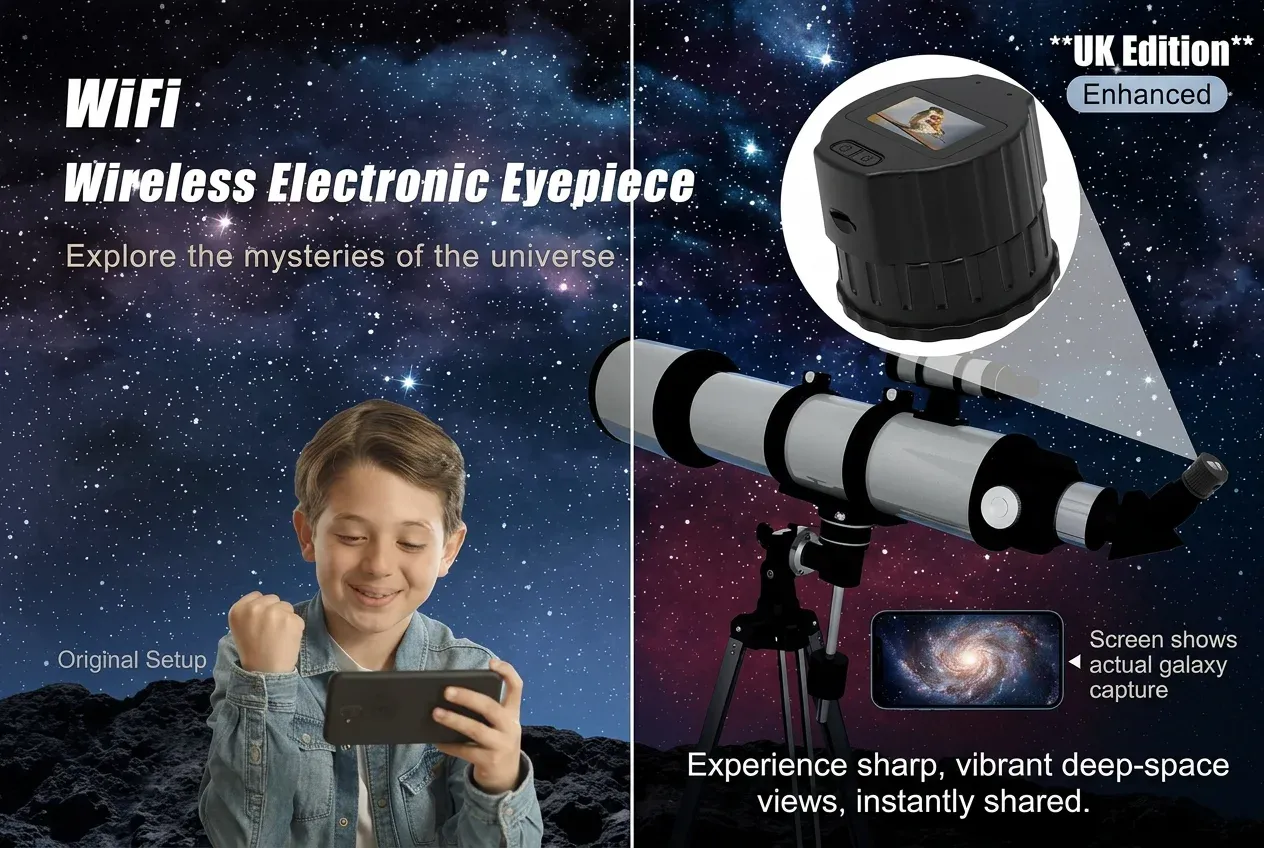
At WifiTelesc, the appeal is straightforward: a WiFi Telescope Eyepiece Camera gives you an easier way to capture the stars and wildlife wirelessly, with a 1080P telescope camera with screen that reduces the usual friction of visual observing. This guide explains what an electronic telescope eyepiece is, how it works, who it suits, and what to look for before you buy in the UK.
Key Takeaways
An electronic telescope eyepiece replaces or supplements a standard optical eyepiece with a digital camera-based viewing system.
It helps with comfort, image sharing, simple recording and easier viewing for beginners, families and anyone who finds traditional eyepieces awkward.
For UK buyers, the main checks are compatibility, screen quality, wireless stability, battery life, image resolution and ease of use in cold, damp conditions.
A telescope camera with screen is often the most practical option for home astronomy, birdwatching and outreach because it removes the need to crowd around a single eyepiece.
What Is an Electronic Telescope Eyepiece?
An electronic telescope eyepiece is a compact digital device that fits where a traditional eyepiece would normally sit, or connects through the same optical path. Instead of relying solely on your eye, it uses an image sensor to capture what the telescope sees and displays it on an integrated screen, a connected monitor, or a mobile device over WiFi.
In practical terms, it sits between old-fashioned visual astronomy and full astrophotography. You are not necessarily building a deep-sky imaging rig with equatorial mounts, guide scopes and processing software. You are making the telescope easier to use, easier to share and easier to document.
This matters because standard eyepieces can be limiting. Eye relief may be poor, focusing can feel fiddly, and the viewing angle is not always comfortable. An electronic telescope eyepiece reduces those barriers. It can also help people who wear glasses or who find sustained viewing through a small optical opening tiring.
How It Differs From a Standard Eyepiece
Optical eyepiece versus digital viewing
A standard eyepiece is a purely optical component. It magnifies the image formed by the telescope and sends it directly to your eye. An electronic telescope eyepiece captures that image digitally. The result is less about raw optical purity and more about convenience, accessibility and recording.
Shared viewing
With a normal eyepiece, one person looks at a time. With an electronic system, several people can watch together on a screen. That is useful for family observing, school sessions, club demonstrations and wildlife viewing from a hide or garden setup.
Recording and playback
A conventional eyepiece does not save anything. An electronic eyepiece can capture stills and video. If you are observing Jupiter's moons, the lunar terminator, nesting birds or distant coastal views, being able to review the footage later adds obvious value.
Ease of use
Beginners often assume the hardest part of telescope use is finding objects. In reality, staying comfortable while focusing and getting a clear view can be just as frustrating. A screen-based system often feels far more forgiving than pressing your eye into a small eyecup in the dark.
Why UK Buyers Are Looking at Electronic Eyepieces
The UK has strong interest in home-based hobbies, garden wildlife watching and practical consumer tech. Telescope use fits naturally into that, especially where buyers want equipment that is simple to set up and rewarding from the first evening. In a climate where clear skies can be irregular, ease matters. If a break in cloud appears for half an hour, most people want gear that works quickly.
That is one reason products such as a telescope camera with screen are attracting attention. They shorten the path from setup to visible result. Instead of adjusting posture, swapping eyepieces and asking everyone whether they can see the object, users get an immediate shared view.
There is also a wider accessibility point. The NHS notes that visual changes become more common with age, including reduced contrast sensitivity and focusing difficulties in some individuals. While an electronic eyepiece is not a medical device, screen-based viewing can be easier for some users than repeated direct eyepiece viewing. That makes it relevant for households buying one telescope for mixed ages and abilities.
For readers comparing digital options more broadly, The Ultimate Guide to Disp Camera in the UK gives useful context on display-led camera systems and where they fit within practical home use.
How an Electronic Telescope Eyepiece Works
The core components are simple. Light enters the telescope, is focused by the telescope optics, then reaches the camera sensor in the electronic eyepiece. The sensor converts light into a digital image, which is processed and shown on a screen or streamed over WiFi.
Sensor and resolution
The sensor determines how much detail can be captured and how well the device copes with dim light. For casual astronomy and wildlife observation, a 1080P output is a sensible baseline. It offers enough detail for enjoyable viewing without forcing the user into a more complex or expensive setup.
Display and live view
A built-in display is one of the strongest practical advantages. It turns the telescope into a more social and immediate tool. WifiTelesc positions this clearly with its focus on a 1080P telescope camera with screen, which matches what many buyers actually want: simple live viewing without extra adapters or a laptop balanced beside the tripod.
Wireless transmission
WiFi support lets users stream to a phone or tablet, save files and monitor the view remotely. For wildlife watching, that can be especially helpful if you want to keep distance from a nest box, feeder or shy species.
Power and storage
Most electronic eyepieces use rechargeable batteries and local storage, such as a memory card. In the UK, where outdoor sessions may involve low temperatures and damp air, battery performance and physical reliability matter more than spec-sheet headlines.
Main Benefits of an Electronic Telescope Eyepiece
1. More comfortable observing
Long sessions at awkward viewing angles are one of the least discussed frustrations in amateur telescope use. A screen solves much of that. You can stand or sit more naturally, especially when the telescope points high overhead.
2. Better for families and group use
If you have ever tried to show Saturn to three children through a single eyepiece, you already know the problem. Each person nudges the focus or mount, someone cannot align their eye correctly, and the moment is lost. Electronic viewing makes the experience far more stable and inclusive.
3. Easier image capture
Many buyers want a record of what they saw, even if they are not aiming for publication-grade astrophotography. An electronic telescope eyepiece provides a straightforward route to saving snapshots and clips.
4. Practical for wildlife and daytime use
These devices are not limited to astronomy. They can also support birdwatching, countryside observation and long-range viewing, which broadens the value of the purchase for UK households.
5. Lower barrier to entry
Traditional astronomy gear can feel technical very quickly. A digital eyepiece with a display lowers the learning curve. That is why related guides such as Telescope Camera With Screen Explained: A UK Buyer's Guide have become useful reading for people deciding what level of kit they actually need.
What to Look For Before You Buy
Compatibility with your telescope
Start with the barrel size and connection method. Many telescopes accept 1.25-inch accessories, while some support 2-inch fittings. Check whether the electronic telescope eyepiece is designed for your focuser size and whether any adapter is required.
Screen usability
A screen is only helpful if it remains visible outdoors and easy to interpret in low light. Look for a display that is bright enough, sensibly sized and simple to navigate without endless menu hunting.
Image quality that matches the job
Do not overbuy resolution if the rest of the optical chain cannot support it. For many users, stable 1080P performance is more useful than inflated specifications. Optical quality, focus precision and sensor behaviour in real conditions matter more than marketing numbers.
WiFi reliability
Wireless features sound attractive, but they need to work consistently. A connection that drops when you step back a few metres is not much use. UK buyers using gardens, patios and hides should prioritise stable local connectivity and straightforward app pairing.
Battery endurance
A short battery life is a common source of frustration in field electronics. Cold evenings reduce runtime. Choose a unit that can comfortably handle a full observing session without anxiety.
Weather awareness
The UK climate is rarely kind to exposed electronics. Moisture resistance, sensible port covers and sturdy construction are worth paying for. Even if a device is not weatherproof, it should feel suited to repeated outdoor use.
Simple controls
A buyer's guide should be honest about this: many people abandon gadgets with poor interfaces. Buttons, menus, recording options and WiFi controls should be easy to understand under red torch light or in a cold garden with gloves nearby.
Who Should Buy One?
Beginners who want fewer setup frustrations
If you are new to telescopes, an electronic telescope eyepiece can make the hobby feel more approachable. You spend less time wrestling with eye placement and more time actually looking at the target.
Parents and grandparents
Shared viewing is a major advantage in family settings. It lets everyone see the target at once and keeps the session moving.
Wildlife watchers
For users who want one device to support birds, distant landscapes and occasional astronomy, the value proposition is stronger than a purely night-sky accessory.
Users who wear glasses
Not everyone enjoys direct eyepiece viewing, especially with limited eye relief. A screen-based system can be much more comfortable.
Clubs, schools and outreach groups
Public viewing works better when visitors can see a live image on screen. The Royal Astronomical Society highlights the importance of public engagement in UK astronomy, and digital viewing tools fit naturally into that kind of educational setting.
Common Mistakes UK Buyers Make
-
Buying on resolution alone. A higher number does not guarantee a better experience. Ease of focusing, screen clarity and connection stability often matter more.
-
Ignoring telescope compatibility. Always confirm fitting size and mounting requirements before ordering.
-
Assuming it will replace every eyepiece. Some users still enjoy a traditional optical eyepiece for certain targets. An electronic option is often best seen as a practical upgrade, not a complete replacement.
-
Overlooking British weather realities. Dew, cold and light cloud are part of normal use here. Buy for real conditions, not ideal laboratory ones.
UK Market Data and Why It Matters
Consumer appetite for smart imaging devices is not a niche trend. According to Ofcom's Online Nation reporting and wider UK digital usage data, smartphones, tablets and connected screens are embedded in everyday viewing habits across British households. That matters because an electronic telescope eyepiece succeeds when it fits existing behaviour: live view on a screen, quick sharing, simple capture and wireless convenience.
There is a related practical point on confidence. The UK Office for National Statistics has repeatedly shown high levels of internet use and connected device adoption across households. A WiFi-based telescope accessory no longer feels specialist in the way it might have done a decade ago. Buyers now expect familiar pairing, recording and display behaviour from hobby equipment.
That is also why articles such as The Ultimate Guide to Disp Camera in the UK and Best Camera And Cctv: Honest UK Review (2026) are relevant supporting reads. They reflect a wider UK demand for practical camera systems that prioritise visibility, monitoring and ease of use over technical complexity.
Why WifiTelesc Fits This Category
WifiTelesc's core proposition is clear rather than inflated. The promise is not that every buyer will become an astrophotography expert overnight. The promise is that a WiFi Telescope Eyepiece Camera makes it easier to capture stars and wildlife wirelessly, using a 1080P telescope camera with screen that removes much of the usual awkwardness.
That focus matches what many UK buyers actually need. They want fast setup, visible results, simple operation and a product they can use from the garden, on a short countryside trip, or during a family evening under clear skies.
From an experience standpoint, that is the right way to frame the product. Most first-time buyers are not choosing between observatory-grade imaging workflows. They are choosing between a telescope they will struggle to share and one they will genuinely use.
Ready to Upgrade Your Telescope Viewing?
If you want a simpler, more comfortable way to observe and record what your telescope sees, an electronic telescope eyepiece is a practical next step. A screen-based WiFi system suits UK buyers who value quick setup, shared viewing and straightforward capture for astronomy and wildlife alike.
Final Thoughts
An electronic telescope eyepiece is best understood as a usability upgrade. It helps you see more comfortably, share the view more easily and capture what matters without turning the hobby into a technical project. For UK buyers dealing with unpredictable weather, mixed family use and limited clear-sky windows, that convenience is not a luxury. It is often the deciding factor in whether the telescope gets used at all.
If you are comparing options, keep the decision grounded in real-world use: fit, screen quality, wireless performance, battery life and viewing comfort. Those factors matter far more than exaggerated claims. A well-chosen electronic telescope eyepiece can make astronomy and long-range viewing more enjoyable from the first session.
Frequently Asked Questions
Is an electronic telescope eyepiece good for beginners?
Yes. It is often easier for beginners than a standard optical eyepiece because it simplifies viewing, makes focusing more forgiving and allows a shared screen-based experience.
Can I use an electronic telescope eyepiece for wildlife watching?
Yes. Many buyers use these devices for both astronomy and daytime long-range viewing, including birds and garden wildlife. That dual use can make the purchase better value.
Will an electronic telescope eyepiece fit any telescope?
No. You need to check the fitting size, usually 1.25-inch or 2-inch, and confirm that your telescope and focuser support the device or the required adapter.
Is WiFi useful on a telescope eyepiece camera?
For many users, yes. WiFi allows easier monitoring on a phone or tablet, supports remote viewing and makes it simpler to save or share images without extra cabling.
Ready to capture the cosmos with WifiTelesc?
Upgrade Your View — £64.47